
Fitness Classic Diet Concepts Fitness Opinions
Exercise Ideas Strength Training Healthy Mind Archive
 The most important trait of the so called French Paradox is this: In France, there is no army of diet experts and gurus preaching various and often contradictory weight loss concepts. The French eat according to their tradition and not according to what Dr. X or celebrity Y have to say.
Although the obesity rate is six times lower in France than in the United States, it does not mean that Parisians or Bretons do not get overweight. They usually respond to the problem by eating less of what they normally eat. They don't go on structured diets that force upon them a specific selection of foods.
The French break every single American dietary rule. They eat rich creams, cheeses, butters and breads. They eat all kinds of fish and meat, including pork and fatty poultry. Still, their heart disease rates are over three times lower than those of Americans. According to the World Health Organization's data, eight of the top ten countries whose citizens live the longest are from the Mediterranean region, and France is number three. The United States is ranked at number twenty-four.
To put it briefly: the average Frenchman or Frenchwoman does not avoid fats; does not avoid carbohydrates; does not take dietary supplements; does not shun wine at lunch or dinner. Actually, consumption of alcohol is higher, per capita, in France than in the United States.
Weight loss experts and dieticians explain the French paradox in many different ways and often do not agree with one another. Here are several of the most accepted concepts:

The French eat real and not processed foods thus providing their bodies with variety of natural nutrients. Real foods are digested longer than processed ones, which promotes satiety and uses more calories to complete the process. Real foods are not readily available in packs like chips or cookies, so there is little grazing between meals in France.
The French don't rush through meals. Their physiology responds to this relaxed approach by routing blood to the viscera for optimal digestion. As they eat slowly, their brains receive a neurohormonal message that they are satisfied, so they don't overeat. That's why French portions are much smaller than those served in the U.S. They eat less but by eating without haste and by well tasting their meals they become full for many hours to come.
The French sleep more. A recent study by the University of Wisconsin, the Stanford University, and the University of Bristol in England shows that people sleeping less than eight hours have reduced levels of leptin, a hormone that controls hunger, and higher levels of ghrelin, a hormone that stimulates eating. According to a survey by the National Sleep Foundation, nearly 75 percent of all Americans do not get enough sleep each night.
The French eat more animal and plant fat than Americans do but their sugar consumption is about three times lower. For a decade the American government indicated fatty foods as mainly responsible for obesity. Now, more and more experts believe that the real culprit is sugar.
Until lately, the role of wine consumption has been the most controversial issue. New research strongly suggests that wine decreases cholesterol levels, increases metabolic rate and provides the human body with healthy micro-nutrients. It also helps to prevent heart disease.
The French are more physically active by simply walking a lot. Their streets are full of pedestrians, because they use cars only for longer travels. Driving to a nearby food store would be considered ridiculous. They go there on foot and carry purchased articles back home in handbags. If they need more things, they make another trip.
Dr. Will Clower, an award-winning neurophysiologist, wrote in his book The French Don't Diet: "They do think about their weight - but they don't treat their foods as we do - as a list of fats, carbs, and proteins to be eaten in a particular ratio. Who in France orders carbs or fats? No one. They have bread, chicken with vegetables, wine, chocolate, and cheese. When they have weight to lose, micromanaging molecules is the last thing on their minds."

THE ATKINS DIET IS NOT
"HIGH PROTEIN"
While reading articles about Dr. Atkins' diet we often encounter statements that it is a "high protein diet". Remarks about adverse effects of too much protein consumption usually follow. In fact, the Atkins diet is not a high protein diet, it is a low carbohydrate diet. This is an important distinction.
After starting the diet, you considerably reduce consumption of carbohydrates. At the same time, to compensate for all those missing candies, cookies, breads and pastas, you eat more proteins and even fats. That way you can lose weight without feeling hungry and depressed. Yes, you eat more protein rich foods than before going on the Atkins diet but it doesn't mean that you are on a "high protein diet". Higher does not mean high.
We do not specifically recommend the Atkins' diet but we find it useful for at least some dieters. As such it should not be easily dismissed. Read more below.
 DR. ATKINS' WEIGHT LOSS PLAN
For decades dieters have sworn by Dr Atkins' plan. Physicians have been less convinced. But two studies in the New England Journal of Medicine (reported also by Newsweek Magazine) make it harder to dismiss as a quick way to lose weight. In one study, Atkins dieters lost twice as much weight in the first six months as people who followed a food pyramid based regimen. In the other study, severely obese subjects lost an average of 13 pounds after six months on Atkins and only 4 pounds on a traditional diet.
Dr. Atkins diet enthusiast will say:
Atkins is an amazing diet where you will never go hungry again yet still lose weight. This is not a gimmick; it has been around for decades now. Most people will lose 10-30 pounds in the first month! How do they do it? Eat all of the meat, cheese, eggs, fats (like butter and oils) as you like. No calorie counting.
The trick? Eliminate carbohydrates from your diet. The amazing thing is that you will feel better mentally and physically while doing this diet. You will find that your cravings for foods will go away and comfort foods are no longer necessary. Another benefit that most people report is increased mental alertness, no more feeling sleepy after a meal.
Our opinion:
The Atkins diet is more a concept than a strict regimen. Of course, you can purchase his book and follow the author’s advice. On the other hand, you can simply keep in mind that avoiding carbohydrates and eating more proteins instead supports weight loss. Because this is just a concept, it can be implemented in many different ways.
HERE COMES KETO
The so called “ketogenic” or “keto” diet is the same – 150 year old – lower carbohydrate and higher protein nutrition concept.
They use medical terminology and magical formulas to pretend that they have invented something new.
For example: they do not put you on a diet; they put you into ketosis.
Well, you go into ketosis anytime and on any diet – when your body begins burning its fat deposits. Stop eating for two days and you will be there.
Keto gurus indicate numerous health benefits: lower heart disease risk; lower blood pressure; lower cholesterol; Alzheimer’s prevention; diabetes prevention; brain disease prevention, etc.
Of course, all those positive outcomes result from weight loss and not specifically from the “keto diet”.
In principle, the “ketogenic diet” is not different from Dr. Atkins or any other nutritional proposition based on reduced carb consumption. It only uses different vocabulary to describe the process and its implementation.
The idea of consuming fewer carbohydrates and more proteins is so simple! Do you really need a “system” and an “expert” to make it useful?
Gradual modification of your individual eating habits and lifestyle should work better than a sudden jump into some arbitrarily devised regimen.
SUGAR CRAVING DILLEMA
After you begin a lower carbohydrate – higher protein diet, you may experience strong sugar cravings. Ignoring them is not a good idea, because, one day, you may end up binging on sweets. Of course, it would not ruin your diet but it could put you, for a while, out of balance.
First of all, when your mind becomes preoccupied with a slice of cake, eat a slice of cheese instead. You may simply be hungry and your brain directs your attention toward the food, which is now mostly missing from your menu. When you make your stomach busy with cheese, the cake usually becomes irrelevant.
Unfortunately, sugar cravings can persist after meals and be quite intensive. If such is the case, the best idea is to satisfy them but on your own terms.
Never surrender to the aforementioned cake, because, next to sugar, it contains refined flour, which is now your number one enemy. Try hard candies, slowly dissolving them in your mouth. For many dieters they become the best remedy; cravings are under control and caloric intake is minimal.
If hard candies do not work for you or you simply hate them, fight your sugar cravings with protein containing sweets, such as jellies (including jelly candy), ice cream or chocolate. Of course, portion control and decreasing frequency of consumption are essential here!
Sugar is addictive but not in the same way as nicotine, alcohol or even caffeine. If you used to eat a lot of sweet stuff and suddenly begin avoiding it, those cravings are almost inevitable. With time and perseverance, they will diminish and, eventually, disappear.
CHOLESTEROL DILLEMA
Weight loss diets based on low carbohydrate consumption seem to be most prevalent and successful, because they are easy to understand and implement. Their critics have made them controversial by indicating that increased fat and protein consumption puts more cholesterol into our veins thus exposing us to cardiovascular disease.
When Dr. Atkins diet became popular, years ago, many participants, prompted by dire warnings, started measuring their blood cholesterol regularly. All of those, who made their results public, experienced no negative results, on the contrary: total cholesterol levels tended to decrease with an increase of good cholesterol.
Critics dismissed those reports as incidental and unreliable and the discussion faded away, as Dr. Atkins diet faded away as well.
For more than two decades we have been exposed to cholesterol hysteria providing us with chaotic and contradictory advice. There are hundreds of “experts” out there obviously not agreeing with each other. They cannot even decide how many eggs we are allowed to eat in a week!
In June, 2018, a renowned international journal on human nutrition, Nutrients, published an article entitled: “Dietary Cholesterol and the Lack of Evidence in Cardiovascular Disease”. Its author, Dr. Ghada A. Soliman, a physician, biochemist and university professor went through 100 prominent studies searching for proof that we are killing ourselves by eating steak or bacon. She found none.
Here is just one sentence from the conclusion of Dr. Soliman’s now internationally famous article: “The current literature does not support the notion that dietary cholesterol increases the risk of heart disease in healthy individuals.”
So, continue your low carb diet and listen to your common sense, not to “experts”. They are not motivated by your wellbeing but by money. If an “expert” receives a donation from an egg producer, he says that we can eat as many eggs as we want; if he receives a donation from a vegetable producer, he says that we all should become vegetarians, etc.
SOFT DRINKS CONTRA WEIGHT LOSS
Many people, who are trying to lose weight, place the emphasis on tracking what they eat while not paying much attention to tracking the beverages they drink. Yet the calories, consumed both in solid form and liquid form, add up at the end of the day.
Beverages such as soft drinks, fruit-flavored drinks (not 100 percent juice), coffee drinks, and alcoholic drinks are the American public's biggest source of added sugar, which contains a large amount of calories. Furthermore, calories taken in as liquid aren't equal to food calories. That's because beverages don't fill up the stomach or leave you satisfied. So, while you've taken in more than your share of calories in the form of sugar after drinking a soda, you don't feel full and you'll probably end up consuming the same amount of calories in the form of solid food. Add it all up, and your weight loss plan will be ruined.
Consider these points: Liquid calories don't satisfy the body's hunger and appetite and don't signal in a sense of fullness to the brain for an extended period of time. A typical can of soft drink contains 150-200 calories. 3500 calories equal one pound - if you drink two cans of soda a day, you could gain one pound every ten days. After half a year, that's about 18 pounds! So, how can you lose weight drinking a lot of soft drinks?
Here is what you can do: Limit the amount of liquid calories you consume each day. Start by cutting down one soft drink each week until you're only drinking them once in a while. Drink water! Hands down, water is the best thirst-quencher and it helps you to lose weight, because your metabolism slows down, when you are dehydrated.
Dilute the calories in alcoholic drinks by adding club soda or mineral water. Choose solid over liquid more often than not. 100 percent juice provides vitamins and minerals but it won't satisfy your stomach. So, whenever possible, choose fruit over fruit juice and vegetables over vegetable juice. Fruits and vegetables contain fiber which helps you feel full.
 Nutritional Mistakes
Skipping breakfast. Experts agree: skipping breakfast just means you will be hungrier later, which can make it more difficult to control both your diet and your weight.
Not eating before a workout. Providing the body with food for energy allows for a better, more productive exercise session. A pre-workout meal consisting of carbs, a little fat and some protein can also help improve endurance and coordination.
Replacing meals with energy bars or replacement drinks. Sure, they are convenient, but too often energy bars offer little more nutrition than your average candy bar. And replacement drinks may lack adequate fiber. When it comes to eating nutritiously, there’s really no substitute for healthy whole foods.
Eating too much protein and not enough carbs. The current popularity of low-carb diets has many people trying to fuel their activities with poultry instead of pasta. But whether you are an endurance athlete or a body builder, carbohydrates are essential for you. If you are on a low carbohydrate diet, don't forget all the vegetables and fruits you are still allowed to eat.
Trusting the accuracy of dietary supplements labels. Because the supplement industry remains largely unregulated, manufacturers can make unproven and untested claims about their products. Do not fall for the hype and do your homework before putting anything into your body.
Believing that exercise means you can eat whatever you want. Most of us have to learn this lesson the hard way. Whether you exercise a little or a lot, you still need to follow a healthy, balanced diet and watch your portion sizes.
Not drinking the right amount of fluids. Dehydration slows down your metabolism, promoting fat accumulation. At the same time, your body "thinks" that there is a drought out there and attempts to preserve water. Paradoxically, people who are dehydrated look heavier not thinner. Drink a lot of water - and not soft drinks - to let your body function properly and look normally.
PORTIONS AND WEIGHT CONTROL 
It seems that larger restaurant portions have influenced portion sizes at home. A recent study reported in the Journal of the American Medical Association concluded that the average portion sizes of many foods and soft drinks increased drastically between 1978 and 2006. For example, on average Americans now consume 49 more calories from soft drinks; 68 more calories from French fries; 93 more calories from salty snacks such as potato chips and pretzels; 97 more calories from hamburgers; 133 more calories from Mexican foods such as burritos, tacos and enchiladas.
With bigger portions now believed to be normal, it is not surprising that the number of Americans considered overweight or obese has also dramatically increased. Many nutritionists suggest that a greater awareness of portion sizes, rather than focusing on the specific type of food eaten, may be a key factor in weight control. The Cleveland Clinic Department of Nutritional Therapy offers the following guidelines to help consumers identify what is considered a single serving:
 Vegetables or fruit is about the size of your fist;
Pasta is about the size of one scoop of ice cream;
Meat, fish or poultry is the size of a deck of cards or the size of your palm;
Snacks such as chips are about the size of a cupped handful;
Pancakes are the size of a compact disk;
Steamed rice is the size of a cupcake wrapper;
Cheese is the size of a pair of dice or the size of your whole thumb from tip to base.
 TOO MUCH JUNK FOOD!
A new study reveals that junk foods such as sodas and chips make up nearly one-third of our total daily calorie intake. Researchers used data from the National Health and Nutrition Examination Survey to examine the diets of more than 4,700 adults. They concluded that desserts, sodas and alcoholic beverages make up nearly 25 percent of total daily calories, while salty snacks (e.g., pretzels, chips) and fruit-flavored drinks make up another 5 percent. Clearly, junk foods have become a major contributor of empty calories to the American diet, but equally alarming is the finding that vegetables and fruit make up only 10 percent of total caloric intake. This means, according to researchers, that many Americans are both overfed and undernourished and that the answer to the obesity epidemic is not to eat less, but to eat more healthfully.
Here are top ten food groups contributing to calories intake in the U.S. population:
 Sweets, desserts - 12.3 percent of total calories consumption;
Beef, pork - 10.1 percent of total calories consumption;
Bread, rolls, crackers - 8.7 percent of total calories consumption;
Mixed dishes - 8.2 percent of total calories consumption;
Dairy - 7.3 percent of total calories consumption;
Soft drinks - 7.1 percent of total calories consumption;
Vegetables - 6.5 percent of total calories consumption;
Chicken, fish - 5.7 percent of total calories consumption;
Alcoholic beverages - 4.4 of total calories consumption;
Fruit, juice - 3.9 of total calories consumption.
DRINK BUT NOT DROWN
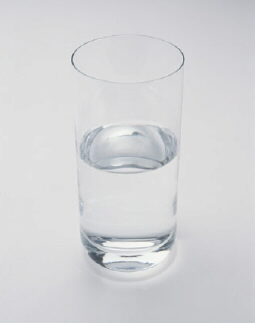

According to the 8 x 8 rule you ought to drink 8 of eight-ounce glasses of water every day to avoid dehydration. And if you drink diuretics, namely coffee, tea, cola, beer etc. - some experts say - you should replace them with double as much of water.
Let us calculate. If one day we have three cans of beer and three four-ounce cups of coffee (48 fl oz) we are physiologically obligated to consume additional 96 ounces of water. 64 ounces of regular intake, plus 48 ounces of diuretic drinks, plus 94 ounces of their replacement makes 206 fl oz: approximately one gallon, two quarts and one pint or over 6 liters of fluid! Give us a break, Mr. Expert!
We have always considered those watery recommendations - repeated monotonously in fitness magazines and brochures - suspicious, so we were very glad to find out about a growing number of scientists - as Jurgen Schnermann from the National Institutes of Health - who debunk the water drinking hysteria and declare America as a sufficiently hydrated nation. They say that beverages with diuretic effect do not remove that much fluid from our bodies, particularly when we get used to them.
So, drink a lot but not obsessively or according to some stiff regimens. You can quickly learn to rationally regulate your hydration level by weighing yourself several times a day. It will not take long, before you know how your body deals with fluids. We accept the 8 x 8 formula but we also take into account other than water fluids, including milk and juicy fruit such as apples or water melon. And we always drink a lot before, during and after our workouts.
 OVEREATING & OVERLOADING CALCIUM
We know that more than 65 % of Americans have overeating problem but nobody knows how many of them are overloading calcium. Yes, calcium, the neglected mineral, now showing up in everything from orange juice to energy bars. Too little of it is very bad but too much even worse, with a potential to cause many health complications, including cancer.
The food industry, by fortifying hundreds of products with calcium, makes it difficult to calculate, how much we actually consume. Ironically, while some of us may be already overloaded with calcium, the majority of us still need more of it.
Here is how you can get too much of the healthy stuff. You believe in a good morning boost, so you start your day with a glass of fortified orange juice (350 mg of calcium). Then you have breakfast: cereal (250 mg) with milk (500 mg), muffin (100 mg) with butter (100 mg), and fruit yogurt (450 mg). You also take, of course, your everyday multivitamin tablet (150 mg).
At this point you have already consumed 1900 mg of calcium, although you need about 1000 mg of it, when you are an adult younger than 50 or 1200 mg, when you are over 50. There's no doubt that before the end of the day you'll consume at least 1000 - 1500 mg of calcium more. And doses larger than 2500 mg are already considered to be potentially harmful. So, if you are very particular about selecting designer food, better start counting calcium..
Can you lose weight eating sugar?
by Wes J Kaczmarek, Ph.D.
My wife loves yogurt. She consumes several 6 oz containers of that popular fruit flavored mash every day. She does it without any sense of guilt. When I grumble, she says: My goodness, this is just a dairy product, not some kind of desert!
Fortunately, Dana is one of those very active persons, genetically blessed with a fast metabolic rate and no tendency to gain weight. Otherwise, her yogurt gluttony would worry me.
Let me study the Nutrition Facts label of one of those ubiquitous "dairy products". A 6 oz plastic can of a 99% fat free substance provides you with 170 calories. It means that just five of those so easy to consume and so easy to forget (who would count!) "dairy snacks" would provide a 130 pound, medium active women with about 50% of her daily calorie requirement. If she added to those "yogurts" (850 calories), a modest lunch of 400 calories, and a dinner of just 650 calories, she would be already at least 200 calories over her daily energy requirement. Given that one pound of human fat contains 3500 calories, this hypothetical lady would gain about one pound in 17 days and more than 20 pounds in a year.
Counting calories is relatively easy but realizing, why we want more and more of them, invites a scientific explanation. Have you noticed that after eating one of those "healthy foods" you quickly feel like another one? May be you also noticed that there is some pretty regular time span between consecutive "yogurts" or other snacks you consume?
According to the glycemic index concept, foods rich in easily digested sugars work as addictives: after being consumed they quickly create a desire for another serving, and then another. As for now, let me return to the Nutrition Facts label of the "dairy product" in question.
The 6 oz. serving of 99% fat free "yogurt" contains (next to 170 calories mentioned above): 1.5 g fat, 5 g protein and... 33 g of carbohydrates, including 27 g of pure sugar. Obviously, the main ingredient of this allegedly healthy food is sugar and once again sugar.
One might suggest: Milk naturally contains a lot of carbohydrates, so may be this is the reason, why its products are also rich in sugar. No way, because in a cup of milk (2 oz more than the examined serving) there is only about 13 g of carbs and, at the same time, 9 g of proteins. Clearly, the "yogurt" feeds you to much less protein and to much more sugar than regular milk. At the same time, 6 oz serving of fat free milk contains only 68 calories.
I used a popular yogurt snack only as an example. There are many other sugar loaded products pretending to be very nutritious and very healthy. Consume them in moderation, if you really want to lose weight or control it. And read those Nutrition Facts labels!

Fitness Classic Diet Concepts Fitness Opinions
Exercise Ideas Strength Training Healthy Mind Archive
Copyright (c) 2000-2023 Fitness Classic. All rights reserved.