Fitness Classic Nutrition Dilemmas Diet Concepts
Strength Training Healthy Mind Fitness Opinions Archive
FITNESS CLASSIC'S FAVOURITES:
Martial Arts
 Martial arts belong to activities providing comprehensive workouts under one flag. Well structured Taekwondo classes, for example, will increase students' muscular strength, cardiovascular endurance, flexibility and efficiency of their neuromuscular system. This last, often overlooked factor, means better balance, speed of reaction, gait and agility, leading to an improved coordination and even grace of the body's movements. Benefits for older adults include increased energy levels and a universal functional fitness, ensuring personal independence later in life.
We agree that the number of martial art styles can be confusing. On the other hand, the variety means an abundance of options. You can visit a book store with a larger sports section and go through manuals of different schools. Or you can borrow from a library a martial arts encyclopedia and look for an inspiration there. Whatever you choose, you will most likely not regret, provided that you also select a club with a good reputation.
Yoga
 Yoga is a complex Indian philosophy aiming at liberation of the human spirit from the bondage of matter. Consequently, famous flexibility, posture and breathing exercises intend to make the body independent, resistant to outside forces and influences, maximally relaxed.
Yoga's holistic approach and ingenious techniques can definitely be very beneficial if taught competently. We are only worried that popularity may lead to vulgarization of this ancient method. For a scholar it takes years of hard study to become a yoga expert, while some "yoga instructors" are now manufactured over weekend courses.
Pilates
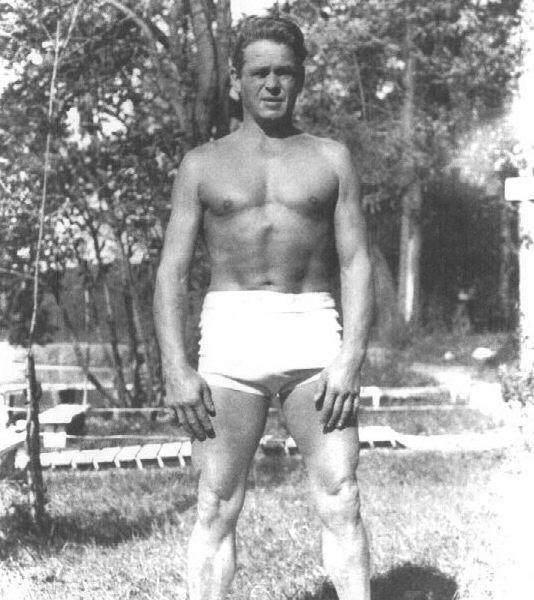 Joseph Pilates (1880-1967) was 57 years old when the photograph to the left was taken. Born in Dusseldorf, Germany, he emigrated to the United States in 1926. As a former boxer, martial artist and physical educator, Pilates founded a studio in New York, where his method of exercise started the rise to its present popularity.
"Simplicity without simplification" may be the best three word description of the Pilates technique. What sometimes looks similar to traditional calisthenics is performed with strict form, controlled speed, and focus on the fluidity of movements. Mental relaxation, accompanied by an anticipation of a positive outcome is also strongly emphasized. Joseph Pilates considered the achievement of an overall feeling of satisfaction and happiness to be the main goal of his system.
Walking
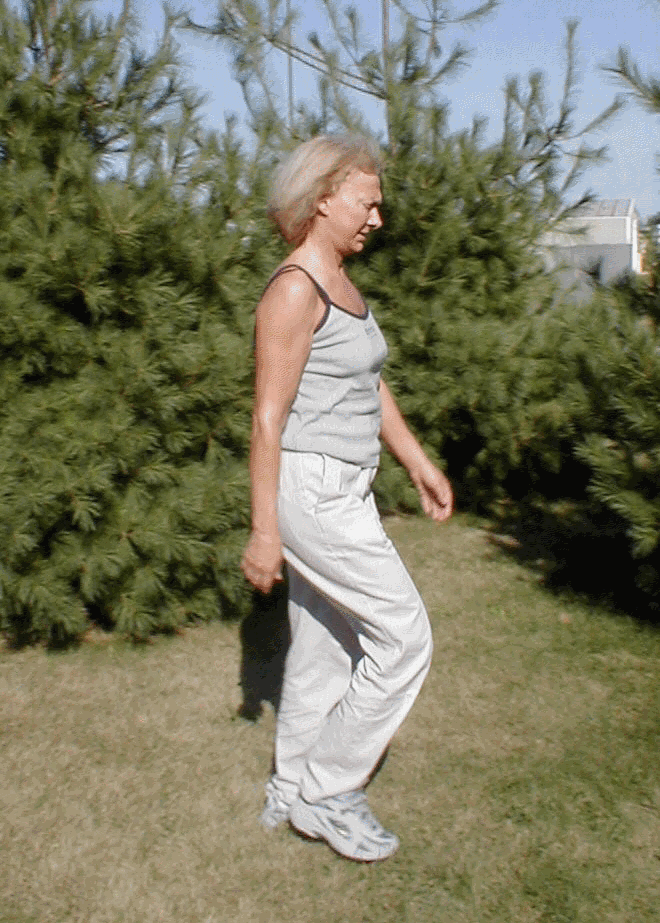 Are you surprised that we have counted an exercise so common as walking into the best ones? If so, consider this: walking is not just walking. The speed of a person's walk can be broken down into four paces: a stroll, a brisk walk, the aerobic walk and race walking. Not only can it help you loose weight, induce cardiovascular fitness and improve muscle tone, but it costs virtually nothing aside from the price of a good pair of shoes. Walking is also a superior way to handle stress and provide the isolation needed for relaxation.
In the last decade, there has been a renaissance in walking. Walkers are rediscovering what has been known over centuries: walking has a global effect on the entire person. It adds hours to one's day and years to one's life.
Many people, planning to start some form of exercise, do not even take walking into consideration. They believe that exercising means doing something special, such as following strict training routines, using sophisticated fitness equipment, being directed by a personal trainer, etc. In the meantime, many experienced exercisers simply walk, greatly improving their well-being and fitness.
TIPS FOR WALKING
To make walking become a habit takes not only willpower - but a strategy. It takes 3-6 weeks to establish a new habit.
Try to build up your pace, over time, relax your shoulders and pump your arms bringing your elbows forwards and backwards.
The goal is four to six times a week for 15 to 60 minutes. Your intensity will be determined by your fitness level, your goals and your health. Always make sure you can carry on a conversation to prevent overexertion.
Schedule regular walks with a friend if you need an extra push or walk first thing in the morning before other commitments get in the way or vary your routine to keep it interesting.
Breathe naturally and get in touch with your body so that the exercise is intensive enough but pleasurable and relaxing at the same time.
Incorporate stress-reduction and relaxation techniques for greater effect. For example: pick a word or short phrase (a favorite prayer or line of a song) and recite it, from time to time, to the rhythm of your footsteps. This helps avoid troubling thoughts.
Get weight to lose weight. Build some muscles:
the most efficient fat burning furnace of your body.
|
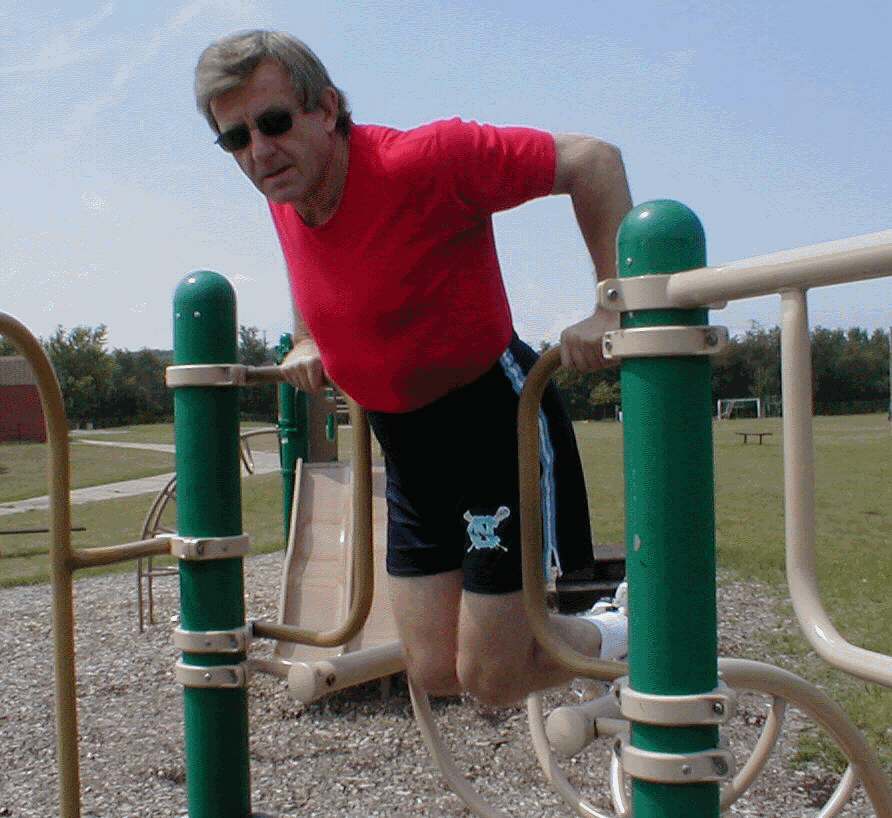
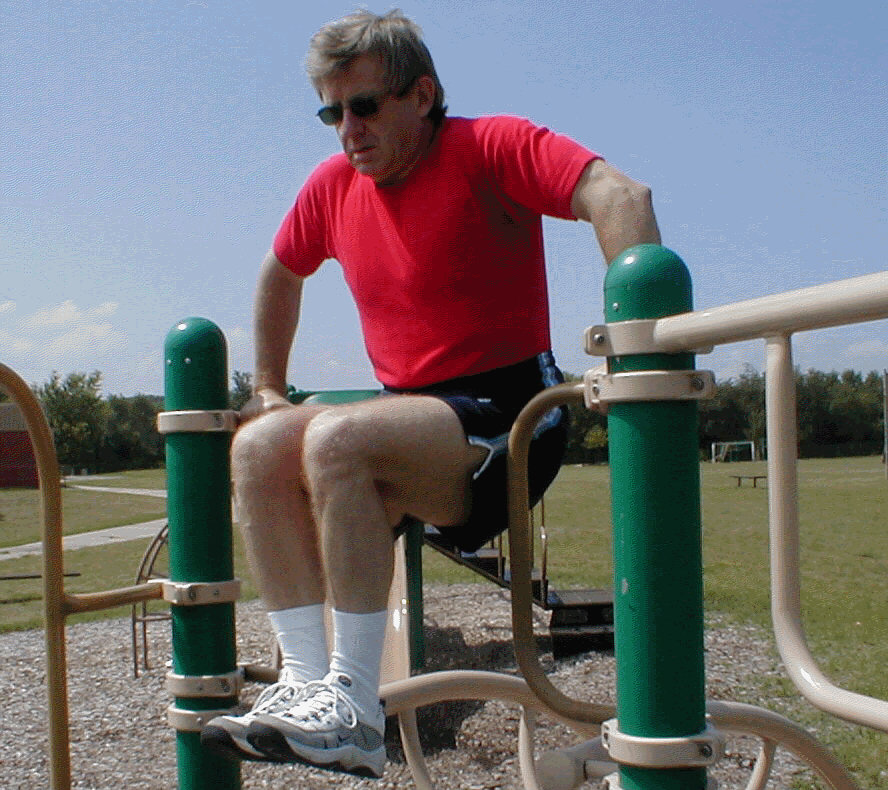
SCHOOL PLAYGROUND AS A GYM A children's playground can serve as a gym. The number of balance and flexibility exercises you can perform there is simply unlimited. Strength training will consist mainly of chin-ups, push-ups, dips, leg and knee raises. But even within these few exercises the number of variations is, once again, unlimited. And every variation means an engagement of different parts of a given muscle, a different order of motor unit recruitment, a different challenge for the postural and neuromuscular coordination. Let's take a look at two dips done by Wes at the same place, apparently similar, but having considerably different stimulatory effect. |
|
|
|
|
|
Extended hips and a narrow grip. Middle section is stabilized by isometric contraction of the erector spinae muscles, knees are kept flexed by the "hamstrings". Diagonal position of the torso and hyperextension of arms causes strong engagement of the pectoralis major, the anterior deltoid, as well as the upper triceps. The lattisimus dorsi also works to move the arm towards the torso but not as intensively as pectoral muscles do. |
Flexed hips and a wide grip. Core stabilization is provided by strong contraction of the hip flexors and abdominals. The pectorals and the latissimus dorsi share the job more evenly now. Shoulder flexion changed to shoulder adduction, moving main stress from the anterior deltoid to the middle deltoid. Elbow flexion is more powerful, strongly engaging the entire triceps. Scapular depression works the lower trapezius and the rhomboids. |
|
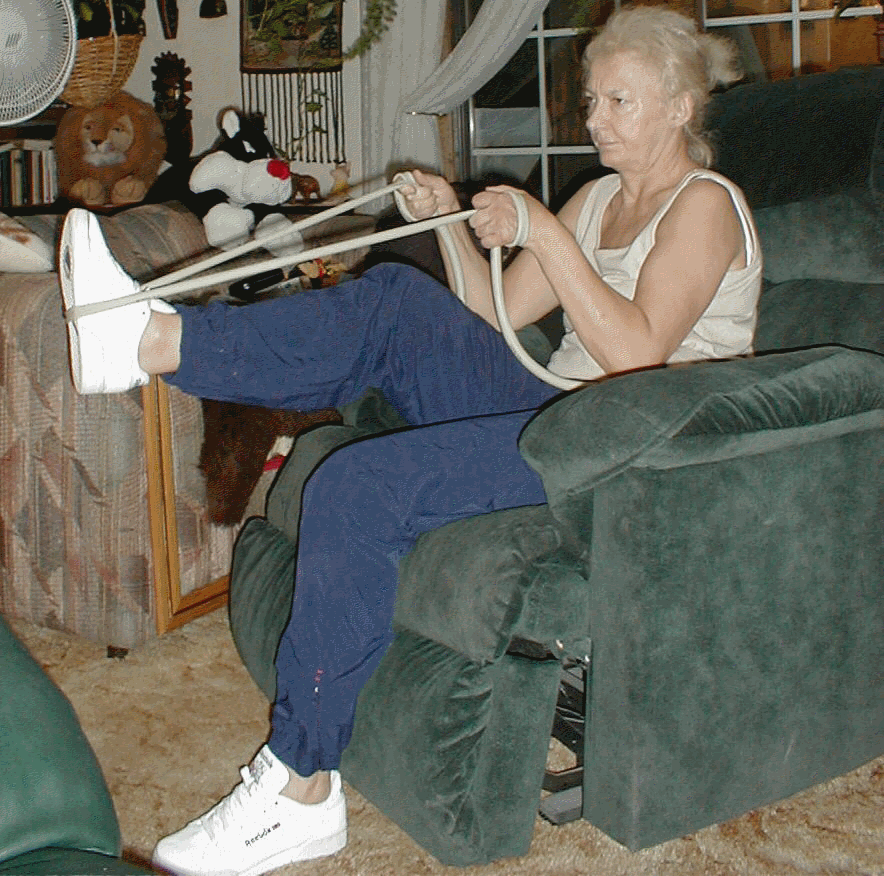
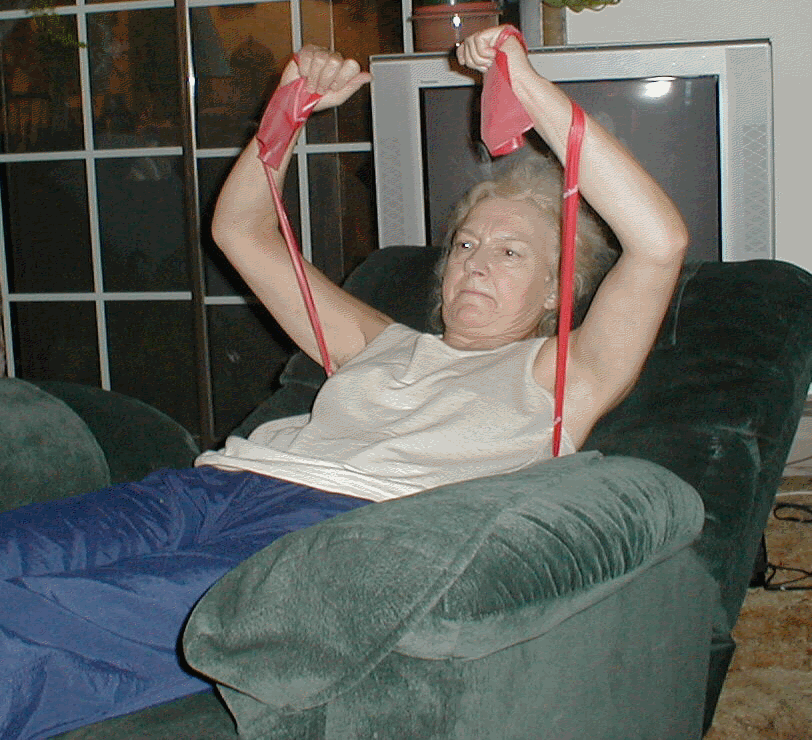
RECLINER AS AN EXERCISE MACHINE But let's say that you do not want to train outside or go to a gym. Well, then you can exercise even on your favorite recliner, while watching TV or listening to music. Here are examples. |
|
|
|
|
|
Dana moves her leg against a resistance tube. She trains concentrically and eccentrically hip and knee extensors. She isometrically improves hand grip as well as shoulder and elbow stabilization. Controlling the tube engages anterior and posterior lower leg muscles, forearm muscles, shoulder girdle muscles, as well as biceps and other elbow flexors. |
Dana relaxes and takes care of her pectoral muscles. She horizontally flexes arms at the shoulder joint and extends elbows against resistance of a rubber band supported by her back. As in the classical bench press, she works pectorals, upper arm and deltoids. Once again, holding the band and controlling it makes the exercise more functional. |
|
BALANCE, FLEXIBILITY, FUNCTIONAL FITNESS In our holistic and natural approach to physical fitness, weight loss and lifestyle modification are equally important. Exercise limited to cardiovascular fitness activities lacks strength training, and strength training, without working on higher stroke volume and venous return of your heart, is no good either. And both of them will miss the point, if you forget about flexibility and balance, which are controlling your agility and orientation in space. You may think that we are about to overwhelm you with too many activities. Nothing of the kind. We also preach functional fitness, offering exercises based on real life activities, training several vital functions of your body at the same time. Here are some examples. |
|
|
|
|
|
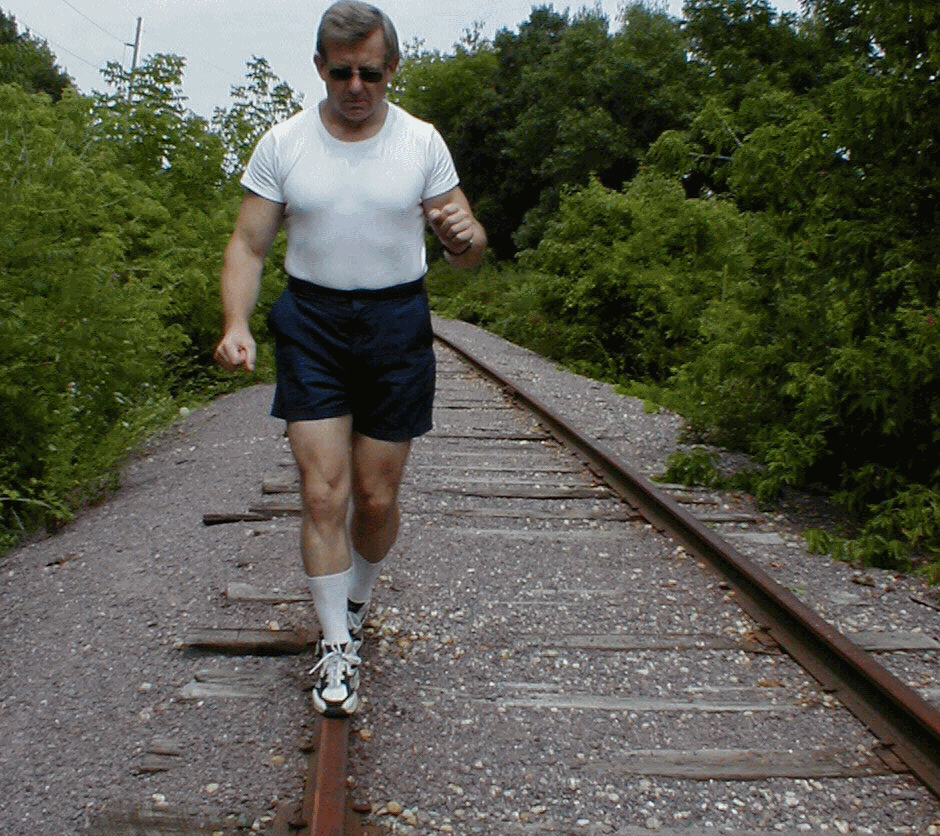
America is covered by thousands of miles of unused railway tracks. Many of us walk on them to improve our balance in a natural, functional way. When you follow the example and become advanced, you will be able to jog on a track, go backwards, jump, and even dance on it. And those abandoned lines often run through bewitchingly beautiful corners of nature. |
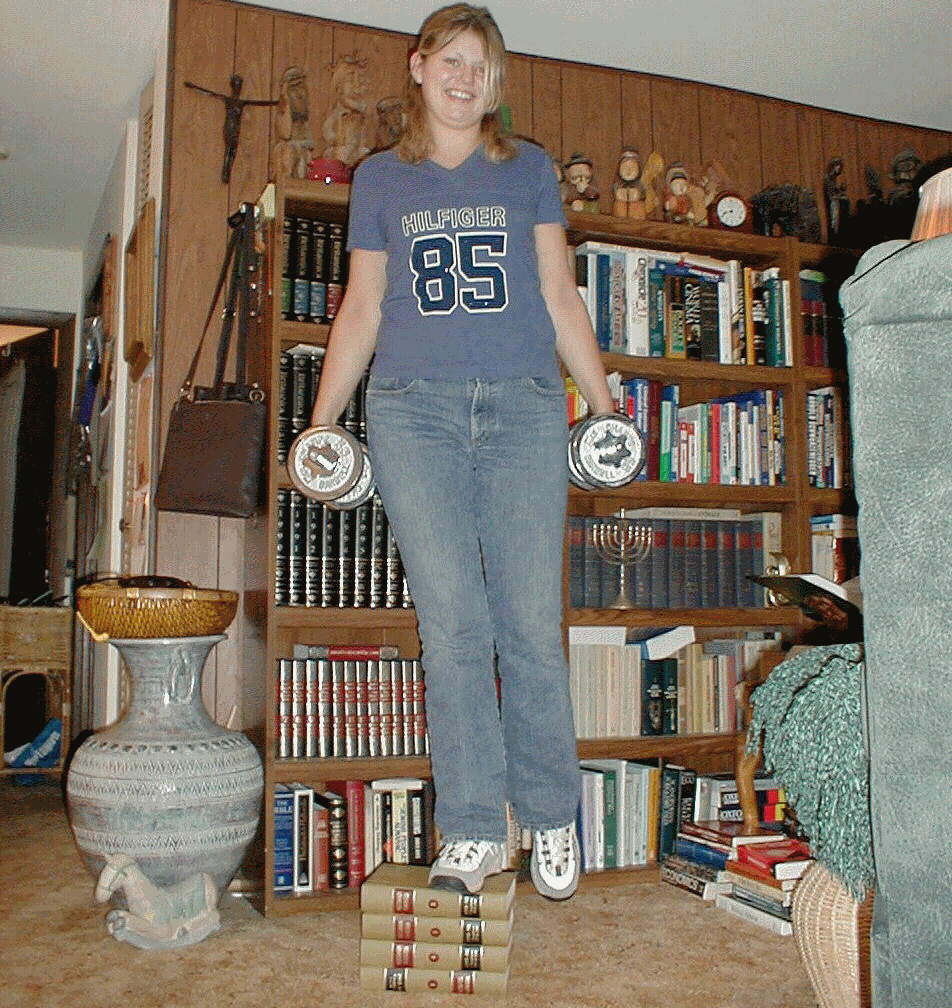
Maggie is performing step-ups on books. No, the books are not here just poor substitutes for something more "professional". They provide safe, yet much less stable support than a rigid object, and that's the point. Stepping up on books challenges not only muscles but also sense of balance and postural awareness. Try to do it with you spine out of alignment. You will feel unstable an quickly correct your posture. |
Top Exercise Myths

With so much health, fitness and weight loss information coming from so many different sources, it's no wonder people are confused. Will crunches get rid of my abdominal fat? What's the best way to lose weight? According to more than 1,500 ACE-certified fitness professionals the most pervasive fitness and weight loss misconceptions are these:
1. Women who lift weights will get bulky muscles.
2. Spot reducing is possible.
3. No pain, no gain.
4. Exercise and weigh loss require a hefty time commitment.
5. If you exercise, you can eat whatever you want.
Interpretation: 1. No, women who lift weights will not get bulky muscles. Their bodies don't produce hormones that help men to build big biceps and chests; 2. No, you cannot remove abdominal fat, thigh fat, buttock fat, etc. - by exercising those particular areas. When you lose weight, fat is being removed uniformly from your body; 3. It's not true that you must work very hard to succeed in exercising. Non-strenuous activities, such as walking, gardening, dancing or stretching can also be very beneficial for your health; 4. You don't need to train for hours to improve your well-being. A thirty minute walk, four times a week, can do wonders for a sedentary person. 5. Exercise burns fat and speeds up your metabolism but too much food can easily bring in more fuel than you expend. If you exercise to lose weight, no matter how intensively, you must also control your diet.
A HEALTHY BODY AS A MORAL OBLIGATION
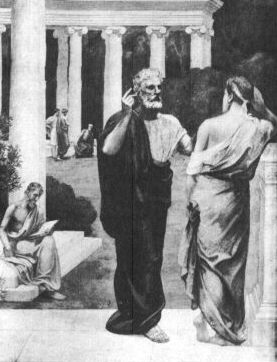 The illustration to the left (based on painting by P. C. Puvis de Chavannes) shows Greek philosopher Plato, talking to one of his students. Plato (428 - 346 BC) was an avid exerciser, which contributed to his name meaning: broad-shouldered.
And why did Plato try to stay fit and healthy, if he was, at the same time, deeply convinced about superiority of human soul over human body? The answer he gave was amazingly simple: only a strong and healthy body can reflect excellence of the soul. Little spiritual impulses would permeate weak, flabby physics.
In his other approaches, Plato indicated fitness as a moral obligation, because physical strength and endurance were survival factors in times of crises. Other famous ancient philosophers, including Aristotle, shared this point of view.
In the Middle Ages, the human body was allegedly entirely condemned as an obstacle on the road to salvation. And once again this is not the whole truth. Leading theologians, as Saint Bonaventure or Thomas Aquinas argued that our flesh did not imprison the soul, as some scholastics suggested. On the contrary: strong and healthy body led to better manifestation of spiritual attributes of human nature.
Of course, we may continue living without any reflection on the above mentioned epochs. But at a time of intended change, old concepts should be at least considered, because they helped our species to survive both physically and mentally.
ORGANIZED EXERCISE AS A NATIONAL MISSION
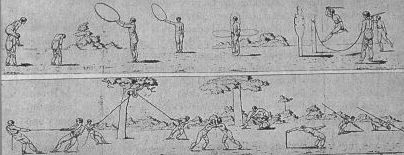
These drawings are not of the best quality but they make the point. Presented activities were invented at the beginning of the 19. century by German "father of gymnastics", Friedrich Ludwig Jahn (1778 - 1852). He became an active educator at the time, when Napoleon's France ruled over most of the Germanic lands. He was inspired by the idea that increased physical strength and health of individual citizens would also strengthen national character and identity. Jahn founded the Turnverein (gymnastic club) movement, based on a variety of outdoor exercises, practiced individually and in groups, in a highly organized manner.
Actually, F. L. Jahn could be considered the first exercise guru, given that his popularity and influence brought on him, after the Napoleonic wars, a suspicion of antigovernment conspiracy. He was imprisoned for some time and his Turnvereins were closed. Only later in his life, was Jahn fully rehabilitated and recognized as an outstanding physical educator.
The above illustrations show only the simplest of Jahn's ideas, because he also invented the parallel bars, the rings, the balance beam, the horse and the horizontal bar - now standard equipment of gymnastics. Nevertheless, the handful of almost two hundred year old drawings presents excellent functional exercises that work out strength, cardiovascular endurance, flexibility, and neuromuscular coordination. And all these by using only ropes, poles, hoops and the help of other exercisers.
They Exercised and Competed for Thousands Years!
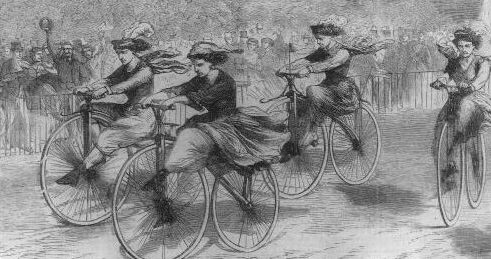
One of the most stubborn sports and exercise stereotypes says that women were almost entirely prevented from training their bodies and taking part in sporting events until very recent times. In reality, even in governed by males ancient Greece women participated in the Olympics and also had their own tournaments on interstate, state and local levels. In medieval Europe, rural populations played on Sundays various ball games. Women participated in them next to their husbands and brothers.
The above press illustration depicts a real event organized in Bologna, Italy, in December, 1868. The first recorded bicycle race, attended only by males, took place in May of the same year, in France. So, ladies did not stay behind too long.
SUCCESSFUL WEIGHT LOSS AND WEIGHT CONTROL
(Exercise approach)
It's not just limiting calories.
Eating less, or cutting back on fat in your diet, won't keep the weight off. What you really need to do is strike a good balance between the calories you consume and the calories you burn. And the only way to do that is to exercise.
Please, don't complain. By exercising, you can lose weight while you eat more calories than if you simply went on a diet. Regular physical activity is much more effective at keeping the weight off in the long run than any diet.
One choice is aerobic exercise.
With aerobic exercise you can lose weight without drastically reducing the calories you consume or sacrificing important nutritional needs. One reason for this is because aerobic exercise not only elevates your metabolism while you're exercising, it can also keep it elevated even after you're done, depending of course on how long and how strong you exercise.
If weight loss and weight control are your goals, some types of aerobic activity will work better than others. Low-impact aerobics, like walking, step aerobics and low-impact aerobic dance are your best bets. Some good no-impact aerobic activities you can benefit from include swimming, bicycling and rowing.
Strength training enhances weight management.
Your muscles burn calories during physical activity. What you may not know is your muscles also burn calories when your body is at rest. Increase your muscle mass, and you'll be increasing your body's capacity to burn calories both during activity and at rest.
Add to that research that shows diets that restrict calories substantially can cause loss of lean muscle mass, along with loss of fat. By incorporating strength training into your activity program, as well as following a moderate diet, you'll be able to maintain lean muscle mass while you lose fat.
Success means right eating and right exercise.
Follow a moderate low-fat diet and an exercise program that combines aerobic activity and strength training. That's the key to losing weight - and keeping it off.
Begin slowly with exercises you find comfortable and build as your body becomes accustomed to the activity level. Don't start out too hard or too fast. Chances are you may injure yourself or quit before you've done yourself much good.
And remember, you can't lose weight overnight. Set a realistic weight-loss goal for yourself - like one to two pounds a week - eat healthy, get going on a program of regular physical activity, and you'll be delighted by what you accomplish.
My remark: I strongly believe in weight loss and weight maintenance enhanced by aerobic routines and – in particular – by weight training. Still, I am also convinced that folks, who hate to exercise, can successfully lose weight by simply rationally reorganizing their diets. All weight loss programs recommended on this web site have real success potential. I have evaluated them using modern exercise science and over 30 years of qualified experience in sports and fitness activities.

Fitness Classic Nutrition Dilemmas Diet Concepts
Strength Training Healthy Mind Fitness Opinions Archive
Copyright (c) 2000-2023 Fitness Classic. All rights reserved.